
"HEIGHT PREMIUM ESMERADA"
12000 article(s) found

Description of flavor characteristics of seven major producing areas of Kenyan coffee beans taste of Kenyan coffee beans treated varieties
Kenyan coffee producing areas introduce altitude, latitude and geology: the equator runs through Kenya, and the border is just within ten degrees of north and south latitude. Belonging to tropical producing areas, there are two rainy seasons every year, with two harvests, with 60% concentrated from October to December and another 40% from June to August. Coffee is mainly grown in volcanic areas around 16002100 meters above sea level from the capital Narobi to the mountains of Kenya. This height

The unique and strong flavor of Costa Rican coffee the characteristics of the manor area introduce the fine coffee.
All the coffee trees planted in Costa Rica are Arabica coffee trees. through improvement, the quality of coffee beans is better and more stable. in order to facilitate picking, coffee trees are kept at a height of about 2 meters through continuous pruning. The coffee that people eat is the taste of the seeds in the fruit that are brewed in water. After picking raw coffee beans, the peel, pulp, seed film and sun exposure must be removed.

2018 Panamanian Jade Manor Geisha Rose Summer Coffee beans Red, Green and Blue
Professional coffee knowledge exchange more coffee bean information Please pay attention to the coffee workshop (Wechat official account cafe_style) Geisha pronunciation is similar to Japanese geisha, so some are also called geisha coffee; because the tree species are taller than ordinary coffee trees, they were originally planted in a small area of the manor and were used as windbreaks. And the son of the manor owner, in order to attend the annual Panama,

Colombian sun roses summer coffee flavor Colombia also has rose summer? Why is Rose Summer delicious?
For more information on coffee beans, please follow the coffee workshop (Wechat official account cafe_style). The species of Geisha was found in the rose forest of Ethiopia in 1931 and sent to the Coffee Institute in Kenya. It was introduced to Uganda and Tanzania in 1936 and Costa Rica in 1953, but not much attention has been paid to roses.

Venezuela, the producer of fine coffee in the world.
The distinctive manor coffee comes from this oil-rich country. Oil was once considered to be the main export of Venezuela. Although coffee trees were introduced from Martinique in 1730 and Venezuela, coffee production was almost abandoned at the height of the oil industry. Recently, coffee plantations have begun to recover, with the original planting of Tipica and

The characteristics of Jamaica Blue Mountain No. 1 recommended by individual coffee beans are fine fruit acidity and resonant sweetness.
Professional coffee knowledge exchange more coffee bean information please follow the coffee workshop (Wechat official account cafe_style) front street-Jamaica Wallenford Manor introduced the best Blue Mountain coffee beans are carefully selected coffee beans from products at an altitude of 2100 meters, the best of the boutique. According to the height of the coffee-growing mountains and the size of raw beans, Blue Mountain Coffee is divided into three grades: Jamaica

Venezuelan Coffee Plantation introduces the treatment of boutique coffee
One of the many plantations in Merida at the foot of the Andes belongs to the Pablo and Pulido families, an ancient farm that has been allowed to downsize. Since taking over the farm in the early 1980s, the Pulido family has harvested coffee from existing bourbon coffee trees and planted new tree species.

Introduction to the characteristics of Malawian Coffee Rosa Flavor description manor Variety
Malawi Coffee Rose Summer Flavor description treatment method Rose Summer Coffee raw beans have a very beautiful blue-green, jade-like warm texture, smell fresh grass, peach, berry flavor and oolong tea unique milk flavor, tropical fruit, strong sweetness that most coffee beans do not have; these are the feelings that Rose Summer has always brought to us. Proper baking, she

Coffee origin Venezuela's very characteristic manor coffee
The distinctive manor coffee comes from this oil-rich country. Oil was once considered Venezuela's main export. Although coffee trees were introduced from Martinique as early as 1730 and Venezuela, coffee production was almost abandoned during the heyday of the oil industry. Coffee plantations have recently begun to revive, with the original plantations of Tipica and
A brief introduction to the varieties of St. Roman Manor Coffee with unique strong Flavor
All the coffee trees planted in Costa Rica are Arabica coffee trees. through improvement, the quality of coffee beans is better and more stable. in order to facilitate picking, coffee trees are kept at a height of about 2 meters through continuous pruning. The coffee that people eat is the taste of the seeds in the fruit that are brewed in water. After picking raw coffee beans, the peel, pulp, seed film and sun exposure must be removed.

From Coffee Beans (22)--America--Venezuela
The distinctive manor coffee comes from this oil-rich country. Oil was once considered Venezuela's main export. Although coffee trees were imported from Martinique as early as 1730, coffee production was almost abandoned during the heyday of the oil industry. Coffee plantations have recently begun to revive, with the original plantations of Tipica and Bo

Introduction to the producing areas of the characteristics of the grindness treatment method for the flavor description of Costa Rican Tarazhu Coffee
All the coffee trees planted in Costa Rica are Arabica coffee trees. through improvement, the quality of coffee beans is better and more stable. in order to facilitate picking, coffee trees are kept at a height of about 2 meters through continuous pruning. The coffee that people eat is the taste of the seeds in the fruit that are brewed in water. After picking raw coffee beans, the peel, pulp, seed film and sun exposure must be removed.

An introduction to the production area of Coffee Grinding degree and Flavor description in Saint Roman Manor, Costa Rica with ideal acidity
All the coffee trees planted in Costa Rica are Arabica coffee trees. through improvement, the quality of coffee beans is better and more stable. in order to facilitate picking, coffee trees are kept at a height of about 2 meters through continuous pruning. The coffee that people eat is the taste of the seeds in the fruit that are brewed in water. After picking raw coffee beans, the peel, pulp, seed film and sun exposure must be removed.

Venezuela's coffee producing region Venezuela's coffee market
Coffee trees were imported from Martinique as early as 1730, but coffee production was almost abandoned during the heyday of the oil industry. Coffee plantations have recently begun to revive, with the old Tipica and Bourbon trees and new plantations laying the groundwork for coffee exports.

Introduction to the characteristics of the manor producing area of Costa Rican boutique coffee beans with unique and strong flavor
All the coffee trees planted in Costa Rica are Arabica coffee trees. through improvement, the quality of coffee beans is better and more stable. in order to facilitate picking, coffee trees are kept at a height of about 2 meters through continuous pruning. The coffee that people eat is the taste of the seeds in the fruit that are brewed in water. After picking raw coffee beans, the peel, pulp, seed film and sun exposure must be removed.

Kenyan Coffee Manor Flavor description Taste characteristics Grinding Calibration method
Many small coffee farmers in Colombia grow, harvest and process their coffee beans independently, resulting in some refreshing single plot coffee. their quality reflects the ingenuity of coffee farmers and the unique culture in which they live. Coffee in Kenya is grown mainly by large farms (Estate)

Granular, full-bodied Costa Rican San Roman Coffee Bean Flavor Taste Aroma Description Introduction
Costa Rican Coffee-Introduction Costa Rican coffee is full of particles, ideal acidity and unique aroma. Costa Rica's coffee industry, formerly controlled by the Instituto del Café de Costa Rica (ICAFE), has been taken over by the Official Coffee Council (Oficina del Caf). Among coffee exports, those identified

Do you know anything about Rosa Coffee?
The pronunciation of Geisha is the same as Japanese geisha, so it is also called geisha coffee. Because the tree species are taller than ordinary coffee trees, they are originally planted in a small area of the manor and are used as windbreaks. In order to take part in the annual competition for the best coffee in Panama, the son of the manor owner searched all the coffee trees in the manor for testing, which gave Geisha a chance to appear on the stage.

Introduction of Huofenghuang Manor in the Central Coffee producing area of Costa Rica
All the coffee trees planted in Costa Rica are Arabica coffee trees. through improvement, the quality of coffee beans is better and more stable. in order to facilitate picking, coffee trees are kept at a height of about 2 meters through continuous pruning. The coffee that people eat is the taste of the seeds in the fruit that are brewed in water. After picking raw coffee beans, the peel, pulp, seed film and sun exposure must be removed.
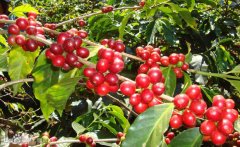
The Brazilian Hirado Prairie is one of the famous producers of Brazilian coffee.
The Brazilian Hirado Prairie is one of the famous coffee producing places in Brazil, with an area of 120W square kilometers, accounting for 22% of the national area of Brazil. Alimentos Farm, founded in 1974, is located in Brazil's Hirado prairie at an altitude of about 900 to 1000m. It has undulating foothills, rich landforms, obvious dry and wet seasons, large temperature difference between day and night, and obvious microclimate, so it is suitable for planting Ca.